
250: The Rich Life: Real Estate, Freedom, and Finding Your Purpose
LISTEN AND SUBSCRIBE
Apple Podcasts | Google Play | Stitcher | Spotify
Welcome back to another episode of The Richer Geek Podcast, today we are joined by Christina Suter, a seasoned real estate investor, advisor, and educator. Christina shares her journey, starting with inheriting a paid-off house at 17, and explains why she views real estate as a vehicle for location, time, and choice freedom, not just money. Tune in as she discusses her shift from appreciation plays in California to high cash flow strategies like room shares , and how her "Live A Rich Life" coaching helps people find meaning and purpose beyond just achieving financial independence.
In this episode, we chat about…
The "Why" for Investing: Christina's core motivation for investing is to be a mom, allowing her time freedom.
Investing Start: She began investing at 17 when she inherited the family's paid-off $200,000 house in LA.
Money vs. Purpose: Achieving financial freedom in her thirties left her unhappy; she realized money brings freedom, but a sense of purpose brings peace.
Shift from California: Christina moved her focus out of high-appreciation California due to poor cash flow and difficult tenant's rights laws.
High-Return Strategy: She shifted from Airbnb to room shares, a strategy that can generate over $5,000 a month, or double the income of a long-term rental, on a $300,000 investment.
Key Takeaways:
Money gives freedom, but mindset is what brings peace.
If you don’t choose your direction, life chooses it for you.
Cash flow and appreciation serve different stages of your financial plan.
Room shares can outperform long-term and mid-term rentals in the right markets.
Your “why” must be deeper than money, the money comes from living your purpose.
Resources from Christina
LinkedIn | christinasuter.com | Email | Contact number: (310) 463-5942
Resources from Mike and Nichole
+ Read the transcript
Mike: Hey, everybody. Welcome back to another episode of The Richer Geek Podcast. Today, we have a special guest, Christina Suter. She's seasoned everything, ladies, gentlemen, she has done so much and a real good friend of mine. I'm just gonna let her identify herself and give us her little bio. How are you doing Christina?
Christina: I'm doing good, Mike, and thank you for inviting me to your show, right? And I just so appreciate listening to your stories. We're in a mastermind together, which is great because then I get to hear stories about his hotels and how they're happening. And you've got one open right now, don't you? You have a thing that you're raising for this minute that sounds fantastic.
Mike: Thank you.
Christina: And fascinating, and it's less than $2 million, which to me is outrageous, that you can get such leverage on a hotel in Spain. That has such depth to it. Such an amazing presence is gorgeous, has history, and it's less than $2 million and you're gonna make profit on it. I'm like, that is fantastic, right? So I'm fascinated with what you're doing, but that being said, what is it that I do? So what I do is I basically have sort of two roles in real estate. One, I'm a professional investor, I'm also a mom, and part of the reason why I'm a professional investor is so I can be a mom. That is my why in investing. Many, many years ago, as a young taught is, one of the stories I tell is that my mom, who was a single mom who was an entrepreneur, had her own business in the house. She was a dynamic lady, let's just call her that. She was a dynamic soul who was very stressed and was constantly chasing things and was often late. And I remember being in preschool and I remember the lady wiping the tables at the end of the day and her going, looking over at me and going, well, I hope your mom shows up soon. I need to go home. And I'm like four, five years old. And I'm like, oh, I'm freaked out. I'm like, "Oh my God, am I gonna be left here alone at the school?" " What's gonna happen?" In psychology, they call it natural narcissism, right? When we're little, there's a natural narcissism. The world is about us and it's not about anybody else. And so in my natural, innocent narcissism, I made that a big deal, right? And so as a mom, 'cause I love being a mom, as your wife pointed out, I love being a mom. It is my nature that I am mother-like. I didn't want my child to have that same experience of a parent who couldn't be home because I was focused on being an entrepreneur and real estate was a great vehicle for being able to do that. Now, what my mom did do right, was at 17 she gave me the family house.
Like, she literally just was like, "Hey, I need somebody to take care of it 'cause my health means I'm leaving LA Who wants to take care of it?"
I went, "I'll do, Mom. No problem." And she gave it to me. She literally titled it over to me. So I now had a $200,000 house that I now own that was free and clear because she had paid it off. And so now I'm like, "Oh, I don't know what the hell I'm doing." But that's how I started. When I was 17, I'm now 57, so count the years and now you know how old I am. And you also know how long I've been investing. So I did single family in LA, single family in Northern California. I eventually moved some of that highly appreciated equity, thank you, California, to a small multifamily on a street called Magnolia in Van Nuys, and I had a seven cap on it, which meant I was investing in LA and its cash flowed, which doesn't exist anymore.
Just so everybody knows that physically doesn't exist. So across my career, fast forward 40 years, I've invested in seven different states in almost everything residential. I've owned a hotel, condo, hotels, condo hotels are very different from what you're doing. I owned a condo hotel. I have flipped in two different states. I've owned single family, multi-family in several different places. I have rehab both single family and multifamily, and let's see, I've done a condo conversion, and two different lot splits, and I've never done ground up development. I've done hard money loans to flippers. I have helped primary residents purchase a variety of things in the private equity space as well. I love seller financing. I've engaged with land, so I've had a variety of things, but all primarily in residential. Then in 2007, my business coach said, "Why don't you coach in real estate?" I was a small business management advisor 'cause I have a bachelor's in business and a master's in psychology, which works well and a teacher's credential 'cause of course I'm a teacher at heart. And he said, "Why don't you teach/coach on real estate?" And I went, "You know? That's a horrible idea."
And then that became a great idea. So that's what I do now, and I love it because it lets me focus on what I feel like my higher purpose is. Like my purpose on the planet, which is to help people transform to freedom and abundance and joy.
And what does abundance really mean? Because I'm gonna suggest abundance is not actually attached to money at all.
Mike: Yeah. So let's talk about that. You know, 'cause I've listened to you speak and live a rich life type of concept. Every workshop that I've gone to, every mastermind, it's facts, figures, numbers.
This is how you can do this. This is how you can retire. And all of a sudden you're starting to ask these questions that I don't know if I've ever asked myself. I've never, and I'm like going, I don't know if I want to answer that question, you know? And write four things down about myself, you know? Let's talk a little bit about that coaching type thing and then that workshop that you have live a richer life because my wife and I actually printed out one of those sheets and started filling things in.
Christina: Good.
Mike: And had some really good conversations. So let's talk about that a little bit.
Christina: I think we'll start with, in my opinion. Well, actually let's start with the story 'cause stories are usually fun. So I was 2001, 2002. I sold a highly appreciated asset and I was moving into my first multifamily and I was replacing a salary as a teacher and a receptionist and working in childcare 'cause that's my history. And so my salary wasn't very big. I didn't require a lot to live on. And so I bought my first 18 unit apartment building, "Oh, I was financially free." I was thinking as much from the apartment building as I was from my job, so I became financially free as the "American Dream. Woo-hoo. I'm financially free!"
This is great, and I'm not gonna work, and I'm not gonna do anything. I'm just gonna retire really early in my thirties, like really. I lasted about six months, and then I really didn't like my life anymore. I was really unhappy. I didn't have a sense of purpose. I didn't have a sense of leadership.
I didn't have a sense of direction. I didn't know where I was going. I'm in my thirties and I'm like, there's gotta be a lot more to blah, blah, blah life. Put all the swear words in there you want rather than just hanging out, being stupid, because that's what it felt like. And that's when I realized how much I loved leadership. That I loved having either students or I loved having children in a classroom when I was a, you know, an infant headroom teacher and what does that mean? And leading a team and I loved that sense of being on purpose in my life. And I started my personal growth work when I was 25. So I started to really understand that this chaoticness that I grew up in wasn't necessarily.
My personal way of being, and that didn't bring me happiness. Right? So I really doubled down on, well then what does it mean if money isn't what brings me peace and I'm still chaotic and dramatic in my personal life, what am I missing? Because the story was, as soon as I don't have to work hard anymore, I should be peaceful, shouldn't I?
And that's when I discovered that actually isn't true. So that's a fallacy in my mind in America, maybe in many different places. Which is money doesn't actually bring you peace. It can bring you freedom. If you don't know what to do with that freedom, you don't get the natural benefits and results of the hard work that you've spent years, if not decades creating. So the mindset is what ultimately brings you peace. The money is what allows you to be at choice. And then what choices you make is what brings purpose to your life. So I literally tell my students all the time, if you want a meaningful life, you need to bring meaning to your life. And it is a choice to live a meaningful life. And you can choose it. And you can choose it freely, and you can choose it abundantly. And you can take your family on trips, but you can also be a leader. You can also be a financially prosperous and financially providing individual in your family. And have freedom and pride and self-satisfaction in who you're being. Whether you're working a full-time job or whether you're a professional investor, or whether you're just stewarding forward a passive portfolio. You have lots and lots of choices. If you don't make the choice, the world makes the choice for you. So make the choice, thus the spreadsheet you're filling out and all the questions. Which is well, who do I wanna be and where do I wanna be? So that really, I've discovered through personal experiences, you want mental freedom. Finance gets you there. It's a tool along the way, much like a hammer or a screw, right? Or fixing an engine on a car. You can buy a beautiful car, but if you don't fix the engine, it doesn't sound good. It doesn't drive well. So who are you gonna be?
Mike: Yeah. And it's different, you know, there's a lot of different personalities out there. Some people are good just sitting in a lazy boy and watching reruns of Matlock or whatever, you know? And then there's some of us who are more entrepreneurial. That is like, I can't sit for five minutes because I need to do something, you know? It's like, what is the purpose? It's very good to actually kind of understand the personality, you know? And you have all these little tests to figure out how crazy you are and how calm you are. It was interesting doing those workshops to really understand, "Okay, this is why maybe I'm the way that I am and this is what I need to be doing." So, you know, ladies and gentlemen, you know, Christina Suter. Look her up on that, this workshop and her teaching is, it kind of opens you up. It's like, okay, well, that's why I'm crazy like I am, you know? And why is my wife crazier than, no, I'm kidding, you know?
Christina: Well, sometimes it does seem that way, doesn't it? You know, we always project out on others. You seem crazier than I am. Oh, wait a minute. Hold on.
Mike: Yeah. I am like going, ha, I knew its spouse.
Christina: It's life.
Mike: But I'm kidding everyone. My wife is extremely successful.
Christina: Nicole is lovely.
Mike: Yes. Before we jump into the next subject. This "Live A Rich Life" workshop. Where can they find that information?
Christina: They can go and live a rich life. They can go on christinasuter.com and I'm one of those crazy people. I had a mentor for years who said eyeball to eyeball and belly to belly, and he kind of had a big belly.
So he literally mean belly to belly when he talks to people. But the point is, it's a very personal experience. If you wanna understand your freedom, you wanna understand how to go from a job that has control over your life and you can't tolerate that. And remember, not everybody finds that situation intolerable. There are lots of people who would tolerate it. My husband tolerated it for years, who's very happy inside of a larger structure that served him. And his way of living. That's great. But if you can't tolerate it because you know it's hemming you from who you are, what meant to be could possibly be just unhappy. That's a sign that there's something in you saying, "No, I wanna be something else. I wanna do something else."
And you can take leadership in that. So call me (310) 463-5942 or text me even better, or text me 'cause then we can set up a phone call (310) 463-5942.
Mike: Yeah, I'm definitely that way. I actually would probably drink a fifth of what, every day if I was in a cube farm, you know? I'd be one of those crazy people running out the buildings, you know? I just, oh. But that's my personality, you know? That's why I was an airline pilot. That's why I'm an entrepreneur.
Christina: Even as a teacher, I had that experience. I remember I was a teacher for years and I woke up and I loved being with my students, but I'd wake up in the morning, I'm like, let me off the carousel. I just can't handle doing the same thing every day. Yeah. I need to have something different.
Mike: You do something in Pasadena, like a networking group?
Christina: I do.
Mike: Thousands of members that, you know, ladies and gentlemen, I know there's a lot of California listeners out there, LA people. What is this networking group that you're,
Christina: Okay. So it's called FIBI. F-I-B-I. I appreciate you trying to avoid saying the name because it makes no sense whatsoever.
It's like Fibi, so Fibi, pbi, pbi, Fabi, Phoebe, Phoebe. Fomo. Right? What is this? So I run the second largest meeting in Southern California called FIBI, FIBI Pasadena for investors, by investors. It's a great network 'cause we don't do sales. We focus on the two things that you need in real estate, which is education. And networking, and yes, it's not money, it's education and networking. I've already explained to you why it's really not money, because the only way you're gonna find good deals and be able to process good deals is with other people in your life. Even for those of us who are truly geeks and aren't too sure about other people, my daughter is one of those.
It is other people that gives you that pathway to being able to take on bigger and more complex projects. Most people can't even buy a piece of real estate without talking to another human being to buy it. So let's start there. That's one meeting. So I have a second meeting, which is ITI, Investor to Investor, which is in Glendale, but we also run our educational program through that. So we have two different students that have their own ITI meetings. We have another student who has his own podcast. We encourage leadership in the community. I teach all my coursework through the ITI brand now versus just Live A Rich Life. And so that's why I teach my real estate courses as well as we have three leadership courses specifically to grow, whether it's students or somebody just looking to leave their job to move into a sense of financial leadership in one's life as an individual who's creating one's purpose. And so those leadership classes are specifically that curriculum.
Mike: Do you ever sleep?
Christina: No.
Yes. I actually do sleep a lot, but I have five different businesses in my five different silos and businesses in my life. Like you, Mike, I have multiple different things and I enjoy having multiple different things.
Mike: Yeah.
Christina: Part of the joy of being alive. I remember I was a kid. I was 18, 19 years old. I was going skiing with one of my mentors, right? And at the top of the mountain, this guy had one arm, but he loved skiing. His name was Raz. And he's like, "Come on Christina, let's do this black diamond. Come on!"
I'm looking at him like, "He's freaking crazy. What the hell is he doing?" And I'm watching him. I'm watching him. I'm like, "Oh, wait a minute. Wait a minute. Hold on." He has a completely different experience of living than I had at the time. He stood at the top of the hill and went, we're gonna fricking take it on. And I'm like, Hey, wait a minute. I want that. I didn't want my, this hesitation inside of me, this uncertainty that I had at 18 and 19 years old and this constantly like, oh my God, life's gonna, you know, and I just went, how do I be that? How do I stand on the top of a hill of my living and go, let's take it on.
How do I generate that every day in my life? And that's what I spent 20 years figuring out how to get to, right? Like, okay, let's do it. It's gonna involve falling down. Come on, it's gonna involve getting up. Come on.
Mike: Yeah, that's all it was, you know? And ladies and gentlemen, you have to find your why. Your why should not be why I want a lot of money. Because a lot of money is a result of doing your why. The money will come. So everyone figure out your why. Christina and I have our whys, but that's it. When you say, I want freedom or I want this. Why do you want freedom? Why do you want to spend time with your families or you know, the people that buy RVs and they can be digital nomads wherever they want to be in the world. They're living a rich life even though they may not make that much money. So money is not it. So, really quick before we leave you've expanded outside of California. And explain to us, I probably know the reason why you are going, there's Midwest, there's kind of like down south and you've switched out of kind of like Airbnb. Talk to us why you're going out of California and then why are you getting out of Airbnbs. Maybe what is the future trend that you're seeing?
Christina: I'll try to keep it short and direct. I can't see our exact timing, but I suspect we're getting up against it.
Mike: We're getting up.
Christina: So, okay. Not a problem. So, I started in LA and I started in high appreciation and that worked really well in helping me grow my portfolio, but it doesn't gimme a lot of cash on cash. The cash on cash, I'm an old school, I've been investing for 40 years. I've been investing for 40 years now, and being old school, I really believe that the purpose of my investments is to create the lifestyle I want. And since I have the capital that I basically need, it's a matter of applying that capital in such a way that it helps to be the backbone for the time freedom, location freedom and choice, freedom I'm looking for. So in doing that, cashflow is not an easy thing to achieve in California. It's much easier to achieve outta state. That's one. Two, I actually don't like the tenant's rights laws. I can tell you a whole story about a lady who I had called the health department on me, and I had to replace her carpet that her dogs had torn up in the time that she was my tenant or I go over to Indianapolis and I have a lady who's in one of my Airbnb units, and she punches a hole in the wall because she tripped. She tripped on my stairs and she punches a hole in the wall and she called me and went, or my population, and went, "I'm so sorry. How can I pay to fix it?" And I'm like, those are the tenants I want to be engaged with. I want to be engaged with people who see it as a hospitality and not as a right for them to be able to use my units. So I liked Airbnb because I liked the relationship I got to have with my guests. And not the relationship I was having with my tenants. Airbnb has gotten swamped in many different cities. Indianapolis is one of those. So I moved from Airbnb to midterm rentals and from midterm rentals I've moved into room shares. Airbnb always gives you like 1.5% more income than you would get as a long-term rental room shares won't double. So what I like about room shares is I'll take the same house, $200,000 to $300,000, all in. I target $300,000. And then at that point I can either long-term rental it for less than $3,000 a month. I can midterm rental it for $3,500 a month, or I can room share it for over $5,000 a month. So I like the returns on my $3,000 investment, $300,000 investment if I can get $5,000 a month.
Mike: Yeah. Wow. Okay. So my next, single family house is, we're gonna be doing some room hacking and room share.
Christina: Maybe let's talk about it.
Mike: Maybe, it's what I do in Spain. Maybe I will buy a couple apartments, more apartments over there and 'cause there especially, I think it works in some of the larger cities when maybe we have some, or near a university.
Christina: It's really well in major cities and universities. Yep.
Mike: The trends with the Alphas and the Zs, because they don't want to buy houses or they can't afford to buy houses, but they're more adept to room sharing because they're kinda social and they could all be sitting around the living room, just be on their phones and not even know each other, even in the room. And then they go out and do their own things but
Christina: They do. And I do have multifamilies in Tulsa, but that's a different format. And yeah, Tulsa has a different code, different laws around tenants rights and much more capable, much easier to flip a multifamily building in Tulsa than it is in California. Same problem. Tenant rights. Mike: Everything's easier outside of California. For some reason. Christina: There's a lot that's easier outside of California but doesn't appreciate as well and it doesn't hold as value as well. I'm just saying there are some, I will defend California a smidge, but only a smidge.
Mike: If you have an appreciation play, you don't need the cash flow. You don't want the cash flow because you're, whatever you're buying, roll state to get rid of the cash flow. They appreciate it, and it's the same. Scottsdale's is getting the same way. There are just some. You want appreciation or do you want cash flow? You know, in the Midwest, you're only going to get maybe 3%, 4% appreciation, but you have great cash flow, so that's wonderful.
Christina: Well, in diversifying a portfolio, so if you're starting with, some people will start with like, they'll lead their corporate job and then they'll start with, oh, I've already got $2 million. I've already got it, but it is just sitting in the stock market. I've already got $5 million sitting in the stock market in some type of retirement account. Can I use that money to create my time freedom? Yeah. Yeah. It's called an allotment schedule, right? Specifically, this much money goes into my cash flow. This much money goes into my appreciation. Here's stage 1 of my freedom. Here's stage 2, here's stage 3, here's the legacy. I'm gonna leave my kids. And that's the conversation that I love having because then you can focus on what brings purpose and meaning to my life and how my cash flow, my assets serve that vision.
Mike: Yeah.
Christina: Versus me serving my real estate.
Mike: Absolutely. Christina, before, I'll let you go, is there anything else that maybe I hadn't hit on that you'd like to inform our audience?
Christina: That I think your hotel idea is fantastic and I think that people should know a lot more about it. I think it's an amazing submarket and niche to be able to buy into a hotel for, even in Euros, it's a relatively inexpensive investment given the amount of return that can be cultivated out of it, like my room share, right?
It's something that has an unusual amount of gross return if you lay the business model of hospitality on top of it. So that's what I think people should know about.
Mike: Well, thank you. And ladies, gentlemen, I am doing a couple podcasts for myself talking about Spain and why I love Spain. Christina: Good.
Mike: You know, I want that siesta kinda life and we're getting it in Spain. We're having a great time. Christina, how can people get a hold of you again?
Christina: So you can find me at christinasuter.com or you can email me or my assistant who will actually answer your email at info@christinasuter.com. Suter is S-U-T-E-R or you can text me at (310) 463-5942. Yes, that is my personal cell phone, and just tell me where you heard me and then we can set up a time to have a quick call.
Mike: Perfect. Christina, thank you so much for coming on The Richer Geek and ladies and gentlemen, figure out your why. Mine is to build a life I don't need a vacation from. So figure out what yours is. God bless and thank you for coming to listen to The Richer Geek Podcast. Take care.
Christina: God bless.
The information, statements, comments, views, and opinions (collectively, “Information”) provided in this podcast are not intended to be and should not be construed as financial, economic, legal, accounting, tax or other advice. For our full disclosure, click here.
ABOUT CHRISTINA SUTER
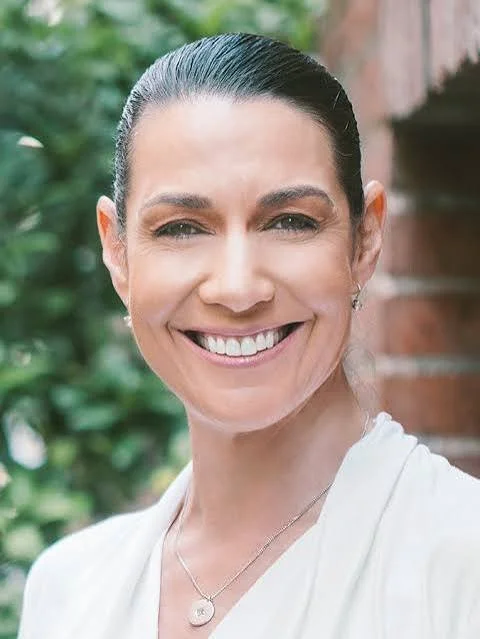
Christina Suter is a seasoned real estate investor, advisor, and educator with over 35 years of experience. She has personally acquired more than 350 properties and advised on over $150 million in capital. As the founder of Christina Suter Consulting in 2007 and the "Live A Rich Life" workshop, Christina helps investors create personalized strategies for financial freedom. She is also the host of the Real Estate Breakthrough podcast and the founder of FIBI Pasadena, a networking group with nearly 5,700 members. With a background in business and psychology.
Christina blends practical investing with a holistic approach to wealth-building. She has been featured in Forbes, The Wall Street Journal, Who's Who and coauthored the book You Got This! in 2019. Her mission is to simplify real estate and help people align their investments with the joy of their purpose in life.