
249: Build Income With Airbnb Arbitrage
LISTEN AND SUBSCRIBE
Apple Podcasts | Google Play | Stitcher | Spotify
Welcome back to another episode of The Richer Geek Podcast. Today, we are joined by Daanish Azim, who built a $60K/month Airbnb business without owning a single property. He lost everything in 2022, took a chance on one rental unit, and turned it into a small empire. Now he teaches others how to do the same through Airbnb arbitrage.
In this episode, we chat about…
What Airbnb arbitrage is and how it works
Why getting property owners’ permission matters
How to check city rules and avoid issues with regulations
Funding the business using 0% business credit cards
What today’s Airbnb market requires: staging, photos, pricing, and systems
Why some people need coaching and others don’t
Key Takeaways:
You don’t need to own real estate to start an Airbnb business
Local rules matter, always check city regulations and HOAs
Most units need proper staging and pro-level photos to stand out
You can fund furniture using 0% business credit cards instead of cash
Owners want three things: rent on time, low stress, and legal use
Many beginners fail not from lack of information but lack of guidance
Focusing on one business for at least a year builds real results
Resources from Daanish
Resources from Mike and Nichole
+ Read the transcript
Mike: Hey, everybody. Welcome back to another episode of The Richer Geek Podcast. Today, we have Daanish Azim. You know, it's a little bit of a story, after losing everything in 2022, he took a bet on one Airbnb unit. No savings, no experience, nothing to lose. Within months, it was generating considerable income. Fast forward, he now manages 18+ units, $60,000 a month, works less than 10 hours a week, all without owning a single property. So we're gonna figure out how he does it. And I know why there are less hours working and more money in the bank. How are you doing Daanish?
Daanish: I'm doing amazing, man. Doing good.
Mike: So I'd like to start off all the podcasts. Give us a little bit about yourself and how you made that decision for that one Airbnb.
Daanish: So quick, quick backstory about myself. I mean, I'm 28 years old now, but I started my entrepreneurship business journey when I was 18, 19 years old, reselling phones. Then I got into, if some people are familiar with like the network marketing, MLM industry.
Then I got very deep into the crypto industry in 2021. 2022, I ended up losing some, a lot, pretty much everything I had through some bad situations that occurred. Then I got into the life insurance industry, but while I was doing life insurance, I was making $5k-$10K even $20K months doing sales in the life insurance space, but I kind of felt like a slave.
I was working it literally from wake up at 8:00 AM dialing older people, working till 6 pm, 7 pm, 8 pm almost every single day for five to six days a week. The money was there. It's not like the money was bad. I just got tired of, it felt like very slavish to me personally, and I didn't have the freedom.
And that's when I was like looking for a different businesses. That's when I randomly came across a YouTube video with, which most people know Grant Cardone, but he was interviewing a guy named Brian Page at that point, and this is probably in 2022. And he was talking about Airbnb arbitrage, which I had no idea what that was. But he was like, "Hey, you can do this business without having to own properties. You don't need $20,000, $50,000."
When I thought about real estate three, four years ago, I used to think that you need $50,000 to do it. So, I never entertained real estate as a business to do back then.
But when he explained the business model, "Hey, you can actually own the do these properties without owning it, sublease it and make a $1,000 to $3,000 profit per property."
I got very intrigued, just like any other person. I started watching more YouTube videos, eventually bought different courses, coaching programs, and then I eventually got my first deal probably about five to six months after I was learning about the business model, and that was in Houston, Texas, while I was sitting in Chicago, Illinois.
That first property made me money, but I wouldn't say it made me profitable. But it gave me a taste of what Airbnb arbitrage was, which is not having to buy properties, being able to make some money, do it virtually, and you're not spending a lot of time doing it. So from there, eventually I kind of built up the business. Short story, three years later, right now I'm at 20 properties now doing about $80,000-$90,000 a month on Airbnb's platform.
Mike: So, you know, it is kind of funny when we talk about Airbnb arbitrage because I'm on the other side of it and owning a lot of multifamily other houses, and it's because of, and we'll talk about what the arbitrage is, but I started noticing people doing that and it's not necessarily something, you have to be careful, don't you? You know, with the owners.
I actually incorporated addendums in my leases. That you were not allowed to do that. But a lot of people don't know about it. I don't know if it's a control thing. It's like, "I want to know who's in my properties.
I don't want people to co-lease them or arbitrage them out." But for those people that don't know what arbitrage is. What exactly are you doing? I know what you're doing, but tell the audience what you're doing in order to arbitrage Airbnbs.
Daanish: Yeah, so basically in the simplest form, what I like to tell people Airbnb arbitrage is, instead of you buying properties, you're renting out a property from a property owner, you're signing a regular lease like a normal tenant would do for maybe one year, two years.
But then you're getting permission from that property owner, or if it's a building apartment and you're getting their permission to basically sublease a property and then be able to list that property as a short term rental on different platforms like the Airbnbs, the Vrbo, Booking.com. And then, let's just say like simplest example, you get a property in Phoenix, Arizona where it's a two bed, two bathroom, and your rent's $2,000, but you list it on Airbnb.
Let's say in the month of July, you would make $4,000 in revenue. In bookings, you subtracted from your rent and expenses, which is typically your utilities rent, and then your cleaning fees that you pay your cleaner. Let's say for the month it was $2,500, so you subtract the $4,000 from the 2,500 you'd be making about $1,500 in net profit.
And the best part is like you can automate and systemize and delegate the majority of the business if you do it correctly.
Mike: I like the fact that you gave the, at the very beginning, they weren't letting the property owners know that they were doing it. And then I'd start getting complaints just like going, "Why are there four people partying in this apartment complex?"
And I'm like going, "I have no idea."
So yeah. Ladies and gentlemen, if you do this, it is important that, look at the lease addendums. Look at the leases. Look at the rental contracts to make sure you can do this. It is an extremely easy way to do Airbnb. Why, you know, pay a million dollars. Why pay $600,000 for a property when you can?
Two, like you said, $2,000 a month lease, and most people can make $4,000 or $5,000 a month. Airbnb-ing it as long as it's up and coming. So tell us, how do you look at it? It might be easy to do the arbitrage, you get the owner's permission. They probably don't know, like with me owning a multifamily, I don't know what the Airbnb rules are because I don't look paying attention.
How are the different city regulations and neighborhood regulations affecting you at all with their crackdown on Airbnb?
Daanish: Yeah, so every market is gonna have different regulation rules, and that's very important. Like before you get into a market and you sign a lease with a property owner. Number one, we try to look for properties that don't have any HOA, number one. Number two, you can do a simple Google search about, let's say if I want to type in for Phoenix, I'm getting a property. I would literally just go on Google, type in city ordinance rules for short-term rentals in the city of Phoenix, Arizona. And then on the website you can kind of find out, okay, what are the regulation rules?
Can you do short-term rentals? Do you have to have a permit in order to do it? Do you have to do a minimum of at least 30 days? So that's where you can kind of get that information and education. And then the biggest thing is, like I tell most people is like, when you're doing this kind of business, it's easy, but you have to do it correctly, meaning you have to have good teams in place, you have to have decently strict rules, so you're not getting complaints from neighbors and you're not getting complaints from your property owners or the landlords, in order to make the business actually work for both the parties.
Because the way I like to tell my property owners or landlords is like at the end of this is a partnership which property owners usually want three things. They want rent paid on time, they want the least headache possible, and they just wanna make sure what you're doing is legal. If those three things are typically taken care of, they'll work with you.
So you as like me approaching it from doing arbitrage, I have to let and communicate these things effectively to the property owner and kind of build that little bit of rapport and trust. For them to be like, "Okay, I am looking to do this."
And the biggest thing is going to property owners that maybe they do have a property sitting on the market that they haven't been able to find a renter. It's a little bit easier to convince them compared to if a property owner just listed their property for the last three days, they're not gonna entertain your offer too. Well unless you have built up trust with them in the past.
Mike: How do you handle the sales tax on your end, like property addresses they want, how does that work? You know, I know with regular rentals I have the LLC, I have the property address, and then it's the rental pay, you know, 5% of the rental income or whatever it is in the rental sales tax.
How does that work with arbitrage?
Daanish: So with Airbnb, they have, so every time a guest books, there's something called a, I think it's hotel occupancy taxes that they pay. But usually it falls on the guest, so you can, do it inside of the Airbnb app, where if you don't want the guest paying it, then you're basically liable for paying that.
But 90%, I would say 95%, 99% of Airbnb hosts usually it's just the guest that's paying that stuff, which is the occupancy taxes, and then there's hotel occupancy taxes, which if a city requires you to get a permit, and again, it's different in different cities, but there's something called the HOT, which is the hotel occupancy taxes, which you do have to pay a percentage of your revenue per month to the city, basically.
Mike: Yeah. Okay. You know, I was just wondering 'cause it, if you don't own the property, if it so I can see if it's done through the platform, it'd be a lot.
Daanish: Yeah. If it's done through the platform it's a lot easier. Usually the guests are paying the occupancy taxes.
Mike: So where do you see, well, let's jump into, so you're teaching people now how to do this.
Daanish: Correct.
Mike: What is your website? How can they get in touch with you? What do they find on the website?
Daanish: Yeah, so basically on my website, it's called BNB Cashflow.
bnbcashflowsystem.com.
On the website, I've created a little free training. It's like a 5 to 10-minute video that kind of has me break down the training and stuff.
Like about Airbnb arbitrage, how does it work? And then I've also, in my website, shown a bunch of case studies of others, like students that we've helped out in the past, like getting their first property. I've helped multiple people make over $10K a month doing Airbnb arbitrage. So just kind of showcasing people like, "Hey, this is not only something that one person can do, as long as you have like a good blueprint and sometimes coaching can help some people."
Sometimes you don't need coaching. It just depends. I always tell people like, it depends what kind of learner you are. Are you someone that's like, you could go watch the information and you're willing to go through trial and error?
Or are you someone that's like, "Hey, I'd rather find someone that already has results in something and just shortcut my process by paying for coaching or mentorship."
So that's always, I feel like I've always told people, for me it's always been, I'd rather pay someone who already has results and not have to go through like trial and error and rather pay someone than go on YouTube and Google.
Because nowadays information's always out there. If someone wanted to really learn how to do Airbnb or real estate or any kind of business, they can get the information. You have Google, you have YouTube, you have chat, GPT. But the majority of times with most people, it's like, it's not information that stops them. It's them needing someone to hold them accountable or someone telling them, "Hey, do this and this is what is gonna come out of it."
Mike: Yeah. A lot of people need more of a checklist or more of a whole, you know, hand helping.
Daanish: Yeah. Like a blueprint proper.
Mike: And that's fine, you know? People learn in different ways.
Daanish: Yep.
Mike: What are most, you know, so you also have to have cash to furnish these things, right?
Daanish: Correct.
Mike: Or do you try to find furnished departments?
Daanish: You could find furnished apartments or homes, but 90% of the time, if you're finding stuff like that, and it's from the previous homeowner, the furniture's probably not good.
It's not furnished well, it's not staged well, which our Airbnb nowadays in 2025, it doesn't work that way any more. Like you have to have professional furniture staging, you have to have professional pictures. You have to know how to price your property correctly. Where maybe in 2020-2021. You could take an iPhone snap for some photos.
Your furniture and staging does not have to look perfect, and your property will get booked out. 2025, it won't really work. So yes, you need money for furnishing, but I tell most people, especially people I've taught, that money doesn't need to be your money, meaning you can leverage OPM. Other people's money.
Usually nowadays if you have a 680+ credit score, you get an LOC credit and your credit profile is pretty solid, your personal profile. You can go apply for these 0% business cards like you have the Chase Business Income Unlimited. You have the Amex 0% credit cards, a bunch of these different banks that will offer you 0% credit cards for 9 months, 12 months, even some that go up to like 15 months.
Now, let's say you get approved for a $10K or $20K limit, which I've seen a bunch of people that's occurred. Now, you could use that money to buy your furniture from websites like Amazon, Wayfair, Walmart, and now you're not having to use your personal capital. If your situation's not there, because the majority of people I tell are like, depends on someone's situation, but it's easier to get a $20K 0% card than it is to save $20,000 for most people.
Mike: Yeah, absolutely. So you're putting it on, you're not doing cash advances, you're just putting the furniture. You're just buying
Daanish: Yeah. You just buy the furniture 'cause when you're buying furniture, especially now, like 90% of the furniture that I buy for my Airbnb properties is usually through Amazon.
Mike: Sure.
Daanish: You find everything on Amazon, realistically.
Mike: That's the entire, basically it's, oh my God, I don't, I'm not gonna tell you how many packages we get every day from, Amazon's crazy.
Daanish: And pretty good prices. Like I just furnished a five bed, two bath. We just launched one in Fort Lauderdale and we furnished it decently.
We didn't go super high-end but we furnished it for like, our furniture itself only costs about $9,000 to $10,000 on our five bed, two bath. So you can do it pretty realistically where it's like, I tell most people you don't need to get the highest end mattress or the highest end beds. You just need to get stuff that looks decent that's gonna do the job.
And you can furnish a two bedroom for $5,000-$6,000. You can furnish a four or five bedroom sometimes for $10,000-$12,000. Mike: Yeah. Perfect. Before we let you go, is there anything that you wanted to hit on within, whether it's your training course or arbitrage in general that I haven't asked you that you'd like to tell our listeners?
Daanish: Not much. I would just say any business that someone's looking to get into, like, from my experience, I've done different businesses. I'm pretty sure, you've had experience in doing so many different things, and I'm assuming you'd kind of agree, is like, I would tell most people that are maybe listening to this or, you know, whatever their situation might be, is kind of finding one thing you wanna do and then pursuing that and kind of going all in on it where it's just like, "Hey, let me try arbitrage."
Then also let me try e-commerce at the same time and then try something else. So my biggest advice for most people is like, ideally find someone that can actually help you do it, whether it's myself, someone else, if you're trying to get into Airbnb, and then just stick through that for at least one year and like actually test it out where it's just like, "Hey, let me try something for a month or two months, and then pivot to something different."
Mike: Yeah, absolutely. Find your niche. Stick to it. Find your lane. How can people get a hold of you outside of your website?
Daanish: Yeah, so my main place that I'm the most active on is my Instagram, which is basically my last name, which is Azim. And then my first name, D-A-A-N-I-S-H, so Azim Daanish. And then I have quite a bit of videos, like longer form on my YouTube as well, which is just.
My first name, Daanish, and last name Azim. So those are the two main stuff.
Mike: Perfect. Daanish, thank you so much for coming on The Richer Geek Podcast. Enjoy the beach. Enjoy Fort Lauderdale and we'll see you down the road. Take care.
Daanish: I appreciate it. Thank you for having me on.
The information, statements, comments, views, and opinions (collectively, “Information”) provided in this podcast are not intended to be and should not be construed as financial, economic, legal, accounting, tax or other advice. For our full disclosure, click here.
ABOUT DAANISH AZIM
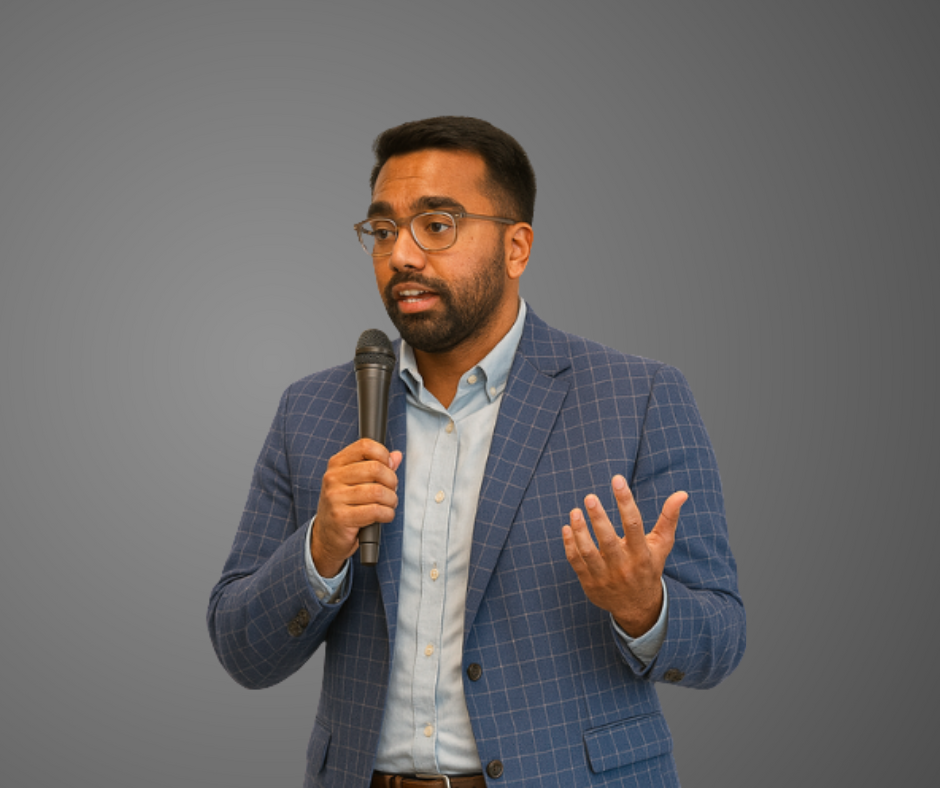
Daanish Azim is an Airbnb entrepreneur who started with one rental unit and grew it into a multi-unit Airbnb arbitrage business. After losing everything in 2022, he rebuilt his life by learning how to rent properties, furnish them, and list them for short-term stays. Today, he runs a system-based operation, teaches beginners how to start their own units, and shares practical tips on building stable income through Airbnb arbitrage.